
Free will
Do we really have free will, or is it just an elaborate illusion created by our brains? In this post, I explore the science and philosophy behind one of humanity's biggest questions.
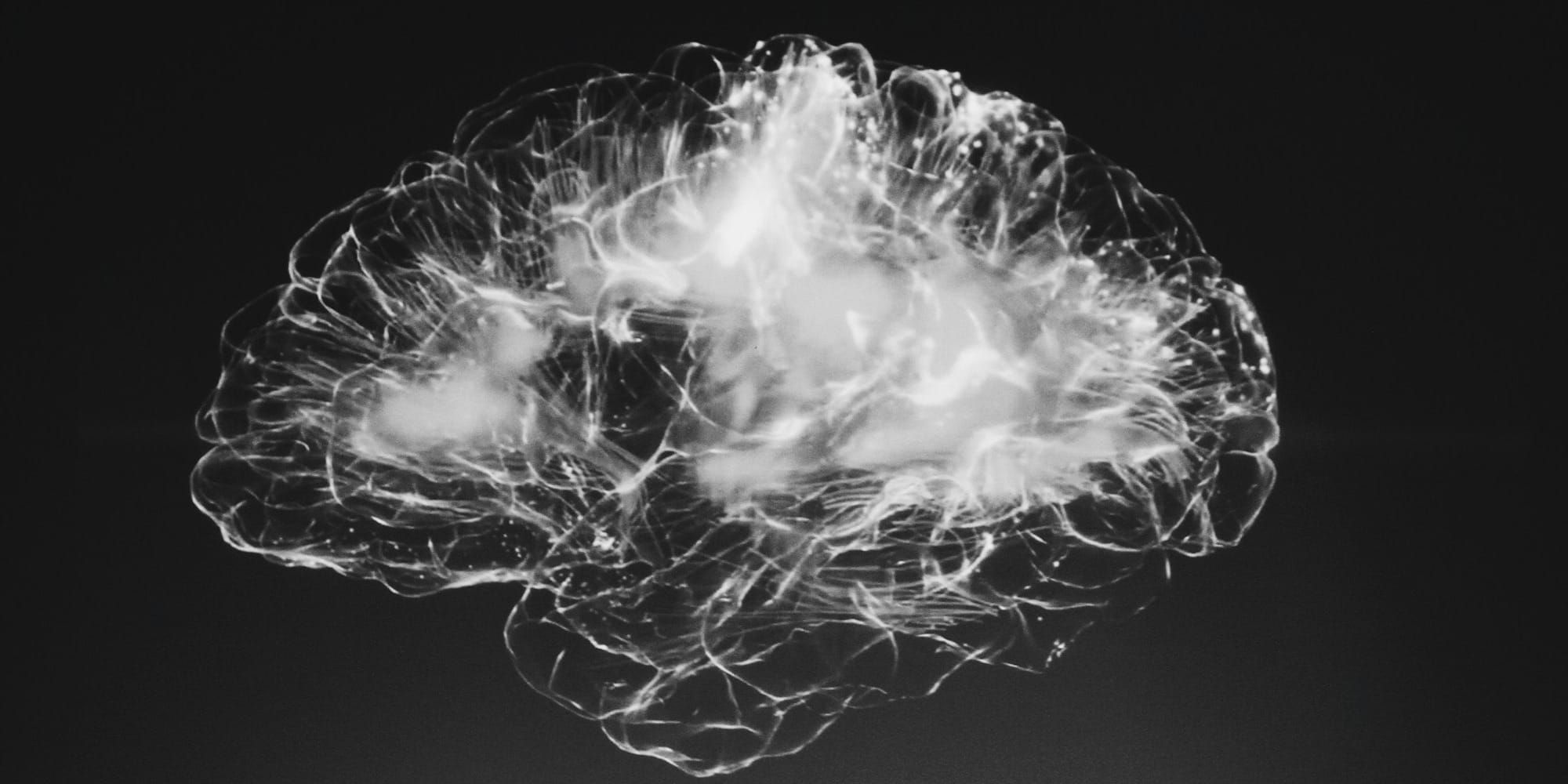
Alright, before we jump into the cool stuff about AI, morality, and all the exciting "future of humanity" stuff, let’s tackle a big question: do we actually have free will, or is it just a clever trick our brains play on us?
Why Is Free Will Important?
You may ask, why is this question important?
Understanding that free will may not be as real as it feels compels us to confront a deeper truth: our sense of self is largely an illusion. What we perceive as our identity—our thoughts, choices, and sense of control—is more accurately a story or narrative created by the brain, perhaps one with evolutionary advantages for human survival. In reality, we are better described as final observers of an intricate chain of neurochemical processes, with much of what we experience as "ourselves" arising only after our brain's subconscious mechanisms have already done their work.
This realization is profoundly humbling. It reminds us that while humans are fascinating and beautiful creatures, we may not be as uniquely special as we often believe. By acknowledging this, we open our minds to the possibility that artificial intelligence—unburdened by the illusions of self and other biases—could surpass us in capabilities and achievements in ways we might not yet fully comprehend.
Don’t worry, this isn’t just some abstract philosophical rabbit hole. Science—neuroscience, psychology, even physics—has a lot to say about how our decisions are shaped, and spoiler: it’s not as "free" as we’d like to think. Stick with me here, because cracking this question open will help us understand not just ourselves, but also the synthetic partially conscious machines we’re creating.
How Little Control Do We Have Over Our Brains?
Just to warm up and develop a better conceptual understanding, let’s explore how little control we might actually have over our own brains. We are largely unaware of the complex processes happening in our brains. Our subconscious does the heavy lifting, processing an estimated 11 million bits of information per second, while our conscious mind handles only around 50 bits per second.
This means that "you" or "I," as unified entities, have little understanding of the vast complexity and specificity that shape who we are.
To better grasp how free will might be an involuntary illusion, consider your sense of free will in a dream state. In dreams, you feel as though you're making choices, deciding freely—just as you do in waking life. Yet, we know dreams are entirely constructed by the brain. Despite separating the conscious reality of wakefulness from the dream state, the experience of free will feels identical in both. This suggests that the sense of being free to choose is not an inherent truth but rather a perception or illusion generated by the brain, much like the other sounds, visuals, and sensations we experience.
In other words, free will is just another construct of the brain, no more "real" than the dreamworlds it creates.
I begin my argument with a rigorous scientific approach, drawing insights from neuroscience and, later, the laws of physics.
Neuroscience and the notion of free will
As early as the 1980s, science provided evidence that the brain begins preparing for actions before we become consciously aware of our decisions.
This was first demonstrated in Libet's groundbreaking experiment. Participants were asked to flex their wrists at a time of their choosing while monitoring a clock. They were also instructed to report the exact moment they became aware of their decision to act. Remarkably, Libet's experiment revealed that electrical brain activity—known as the "readiness potential"—was detected several hundred milliseconds before participants reported deciding to move. In essence, the brain "knew" about the decision before the participants themselves were aware of it. This suggests that we are more like observers of complex neurological processes, experiencing a curious sense of conscious control over actions that our brain has already set in motion.
Further evidence of this phenomenon emerged in 2008, when Soon et al. conducted a study using fMRI technology. Their research demonstrated that brain activity patterns could predict a participant’s decision to press a button up to 7–10 seconds before they consciously reported making the choice. In other words, the brain had already made the decision well before the individual became aware of it.
These findings challenge the conventional understanding of free will, suggesting that our conscious mind might play a smaller role in decision-making than we like to believe.
The Deterministic Universe and Classical Physics
Now, let’s look at the deterministic nature of the universe through the lens of classical physics. If the universe operates like a giant machine, which it does and every effect has a cause, can free will truly exist? Classical physics seems to challenge the very foundation of the idea.
Let’s conduct a thought experiment. Think of a moment in your life—a significant one, perhaps a moment of regret, when you made a decision you now wish you hadn’t. I’ll share my example: just a few hours ago, I procrastinated and wasted an hour mindlessly scrolling through low-quality content on Instagram. I knew it wasn’t the best use of my time, yet I chose it anyway.
Now, imagine we could rewind time to the exact moment before I picked up my phone. Imagine every single detail of the universe was restored to its exact state—the position of every atom, every molecule, every particle. My brain, too, would be reset to that exact neurobiological state: the same synaptic connections, the same activated neural pathways, the same chemical balances, and the same unresolved impulses. Crucially, I wouldn’t have any knowledge of the future that is now my past.
Given this, ask yourself: would I choose differently? The answer is almost certainly no. Why? Because the totality of my decision-making process—my feelings, thoughts, and impulses—was the product of my brain’s state in that moment. The boredom I felt, my habitual tendencies toward instant gratification, and my weakened resolve against social media addiction would still exist in precisely the same way. The same neural pathways would be activated, and the same "silence" in the regions of my brain responsible for higher moral reasoning and long-term thinking would still occur. Nothing would have changed to push me toward a different choice.
This reveals something profound: if we could fully understand the neurobiology of the brain and its interaction with the environment, every decision would appear as an inevitable consequence of preceding events. My choice to scroll Instagram wasn’t truly “free” in the sense that I could have chosen otherwise. It was determined by the state of my brain and the external conditions in that moment.
We can analyze the reasons behind my choice. Perhaps it was because I’m addicted to social media, or because I was bored, or because my brain craved the stimulation of scrolling. Whatever the reasons, they weren’t conjured out of thin air—they were the results of prior causes. These causes, in turn, were shaped by earlier events, and so on, creating an unbroken chain of causality.
If this holds true for one moment, it holds true for all moments. The mind, like the rest of the universe, operates within the bounds of determinism. Every thought, feeling, and decision arises from prior causes, which themselves were determined by even earlier causes. In this view, free will is an illusion—a comforting story we tell ourselves to make sense of choices that were, in fact, inevitable.
Quantum Mechanics and Free Will
Let’s dive into the implications of quantum physics on the question of free will. Some brilliant minds, like Sir Roger Penrose, have proposed that quantum mechanics might play a role in consciousness and, ultimately, free will.
However, even if quantum physics does influence brain activity, as far as our scientific understanding goes today, it doesn’t provide a basis for true free will. Quantum mechanics introduces uncertainty and randomness into the equation, but randomness is not synonymous with free will. Randomness means outcomes are unpredictable, but unpredictability doesn’t equate to having deliberate, reasoned control over our actions.
In other words, if decisions arise from quantum randomness, they aren’t "free" in the sense of being consciously directed; they’re just random.
Core Values and multi dimensional thinking
Sometimes we make more humane choices, like sparing the life of an insect stuck behind a window or not taking money found in the middle of nowhere. At first glance, the more convenient choice might be to get rid of the insect in any way possible or to take the money—or even just leave it behind. However, we often reevaluate, reconsider, and ultimately do what feels like "the right thing." This process gives the illusion of free will.
But let’s examine this more closely: what are the underlying behavioral or psychological reasons behind such righteous decisions?
Taking a scientific approach, we can break down this complex problem for closer analysis. We know that deeply ingrained beliefs and principles—operating largely at an unconscious level—guide this kind of behavior. In these cases, it’s likely core values such as empathy, honesty, or a sense of fairness that come into play. These core values act as internal mechanisms steering us toward humane choices.
Our core values serve as a moral compass, providing a consistent framework for evaluating our thoughts and actions. Meanwhile, the brain's capacity for multi-thinking enables us to consider diverse perspectives, it enables us to self-reflec, analyze our decisions critically, and identify areas for improvement.
When faced with decisions that could trigger more primal instincts—such as greed (which might lead to theft) or sexual desire (which could result in unethical behavior)—our core values often override these impulses, leading us to act more humanely. However, this is not evidence of free will but rather the result of a deterministic—or possibly probabilistic—system. If we consider theories that incorporate quantum mechanics in understanding the brain and mind, this probabilistic nature might even come into play.
Core values are heavily influenced by cultural factors, upbringing, and genetics. Studies have consistently shown how certain cultures or religions can instill specific values among their members. This raises an important question: where is the liberty in human will if these external influences shape our core principles so strongly?
Further evidence comes from studies on identical twins separated at birth and raised in entirely different environments. These twins, despite their separate upbringings, often exhibit remarkable similarities in habits, temperament, personality traits, intelligence (as measured by IQ), and even interests. For example, Nancy Segal’s research on twins separated due to China’s one-child policy, as well as the Minnesota Study of Twins Reared Apart, provide compelling examples of genetic influence on behavior and preferences.
On the other hand, the impact of upbringing is undeniable and so evident that it hardly needs elaboration. The environment in which we are raised profoundly shapes our values, beliefs, and decision-making tendencies.
Taking all this into account, it becomes clear that our choices are governed by deterministic or probabilistic systems rather than true free will.
I know there are deeper, more comprehensive theories that even question the very nature of consciousness itself. While these ideas are fascinating, I don’t see the need to dive into them here and now.
However, it’s worth briefly reflecting on how our perception of reality might not be as trustworthy as we think. Philosophers like **Immanuel Kant** have long argued that our brains construct a subjective experience from the objective world, meaning we never truly access reality as it is. Modern science takes this further with theories like **Donald D. Hoffman’s Interface Theory of Perception**, which suggests that our sensory experiences are not reflections of reality but survival-driven constructs, much like a computer interface simplifies complex operations with easy-to-use icons.
These perspectives challenge our understanding of consciousness, free will, and even identity, showing us that what feels intuitive might be far from the truth.
Remember, we’re challenging the illusion of free will here to establish an objective framework for the ideas we’ll discuss later. That said, I fully agree that we are responsible for our actions, and our legal systems handle this responsibility quite effectively. The concept of compatibilism offers a practical perspective, reconciling free will with determinism in a way that functions well in our world. I find it to be a reasonable and useful approach.